Project - Iticket Admin portal
About
ITicket is a comprehensive web application empowering theme park, tour, and attraction operators to efficiently manage administration, sales, order processing, and ticketing through a flexible, user-centered platform.
Prominent users such as LEGO House, Liseberg, Strömma, Norway's Best, the ABBA Museum, and ICEHOTEL demonstrate ITicket's flexibility across different attractions.
Challanges
The main challenge was designing for a highly dynamic product, where each client had unique requirements for product setup, making standardization complex and requiring creative, adaptable solutions.
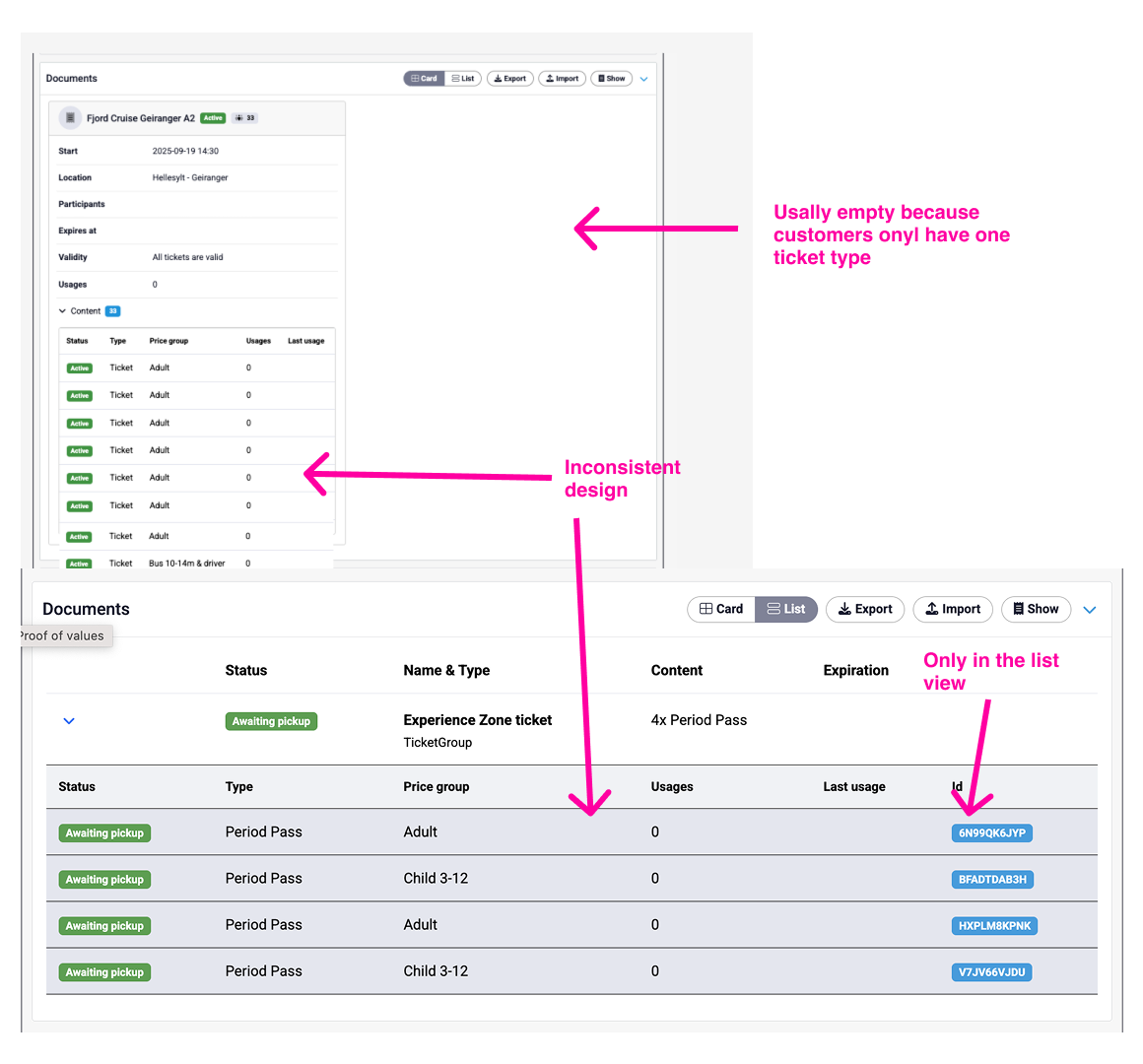
Additionally, inconsistent design and usability across the system created a fragmented user experience, as similar forms varied widely due to differing developer implementations.
My role
As iTicket’s first UX designer, I took ownership of the user experience, driving collaboration with developers and the product manager to unify and elevate the platform’s usability and design.
My responsibilities included establishing a robust design system, leading user research, and engaging with Customer Success to ensure our solutions met real user needs.
A showcase of a standard issue in the system where data should be in different ways and in various places. In this case, it’s the document section in the order view.
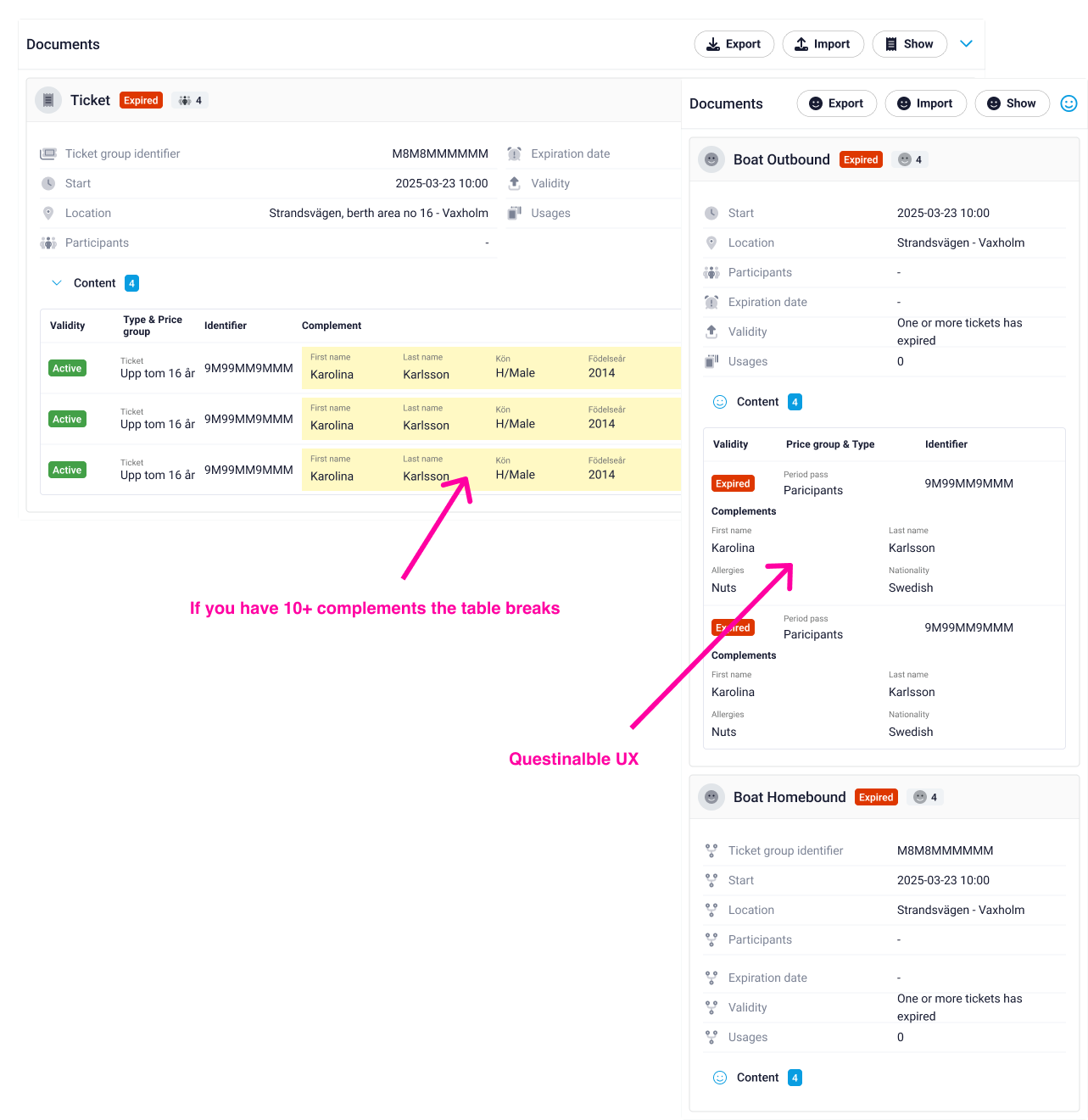
The first solution didn't work, but after a review with the PM, it was evident that we needed to rethink it so that the solution applied to cases with more complements on tickets.
A prototype of the final solution for order document handling in the order view.
This solution was the only one that eliminated the problem of tables breaking. Because we can’t limit the number of complements a customer can set as required on a ticket purchase.
Your specific role in the project and how you collaborated with others
I focused on delivering a unified, highly usable experience for a diverse customer base. Close collaboration with backend developers and PM expanded my technical acumen and enabled me to tackle complex challenges with holistic solutions.
A recurring problem in the system was having the same data represented differently and scattered across various locations. For example, in the order view's document section, users struggled to find and interpret order-related documents efficiently due to this inconsistency.
The first solution failed. After a review with the PM, we revised the approach to ensure it supported tickets with multiple complements.
The final prototype for order document handling resolved the issue in the order view.
This was the only solution that prevented table issues and accommodated unlimited required complements for ticket purchases.
How you came to your proposed solution
I leveraged interactive prototypes and video walkthroughs to quickly validate ideas with developers, streamlining the feedback process and accelerating iteration.
I visualized complex systems through sketches and detailed user stories, ensuring solutions were well-communicated and aligned across the team.
I proactively engaged with the Customer Success team to uncover pain points and real-world workarounds, informing the development of more effective, user-focused solutions.
We achieve solutions through collaboration, especially for complex tasks beyond straightforward updates, such as adding a new icon.
How did your proposed solution solve the problem?
I facilitated solution refinement through close collaboration with the PM and Tech-lead to integrate business insights with user needs and drive impactful design decisions.
Challenges you faced, including design concepts that were ultimately not pursued
One key challenge I addressed was elevating the role of design in the R&D process—championing early design involvement to maximize impact and ensure solutions were truly user-centered.
How the project affected the users and the business
By advocating for design involvement from the discovery phase onward, I helped clarify user stories and project goals, leading to faster growth and more meaningful problem-solving.
A major achievement was integrating Customer Success into feedback sessions, capturing the superuser perspective, and fostering a culture of collaboration and inclusion.
My prototyping efforts not only improved outcomes but also increased customer willingness to invest in tailored solutions.
What I learned
This project deepened my expertise in design systems (using Figma), strengthened my ability to switch between products, and broadened my perspective to consider users’ holistic experiences beyond the digital interface.
Designing for iTicket reaffirmed my passion for cross-functional teamwork and solving complex problems, further fueling my drive to deliver impactful, user-centered solutions.