Project - Iticket Point of sale
About
iTicket’s point-of-sale (POS) is a native Android cashier application for both mobile and desktop, designed to provide a seamless, efficient experience for cashiers selling products in the day tour, attraction, and merchandise segments.
The following customers use the system: Liseberg, Strömma, Norway’s best, ABBA museum, and Junibacken, to name a few.
Challenges
A key challenge was balancing the rapid pace of cashier-customer interactions with the need to rethink usability for a more intuitive experience.
One major challenge involved developing a new feature for a large client: enabling the POS to scan season passes and instantly display relevant details such as name, image, and validity.
My role
My primary responsibility was to improve the POS design, ensuring highly usable flows in close collaboration with developers and PM.
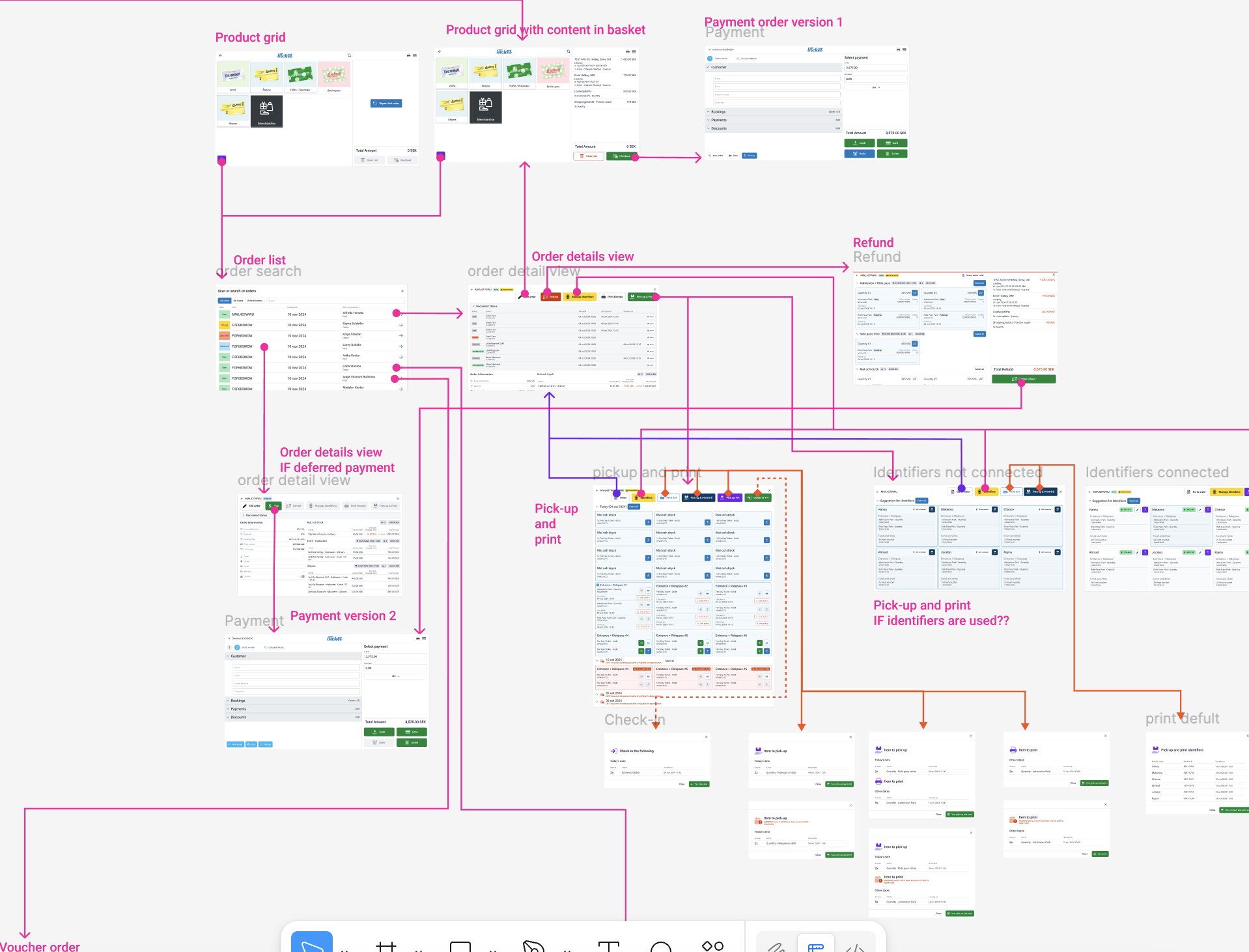
An image of the flowchart of the POS with all possible interactions.
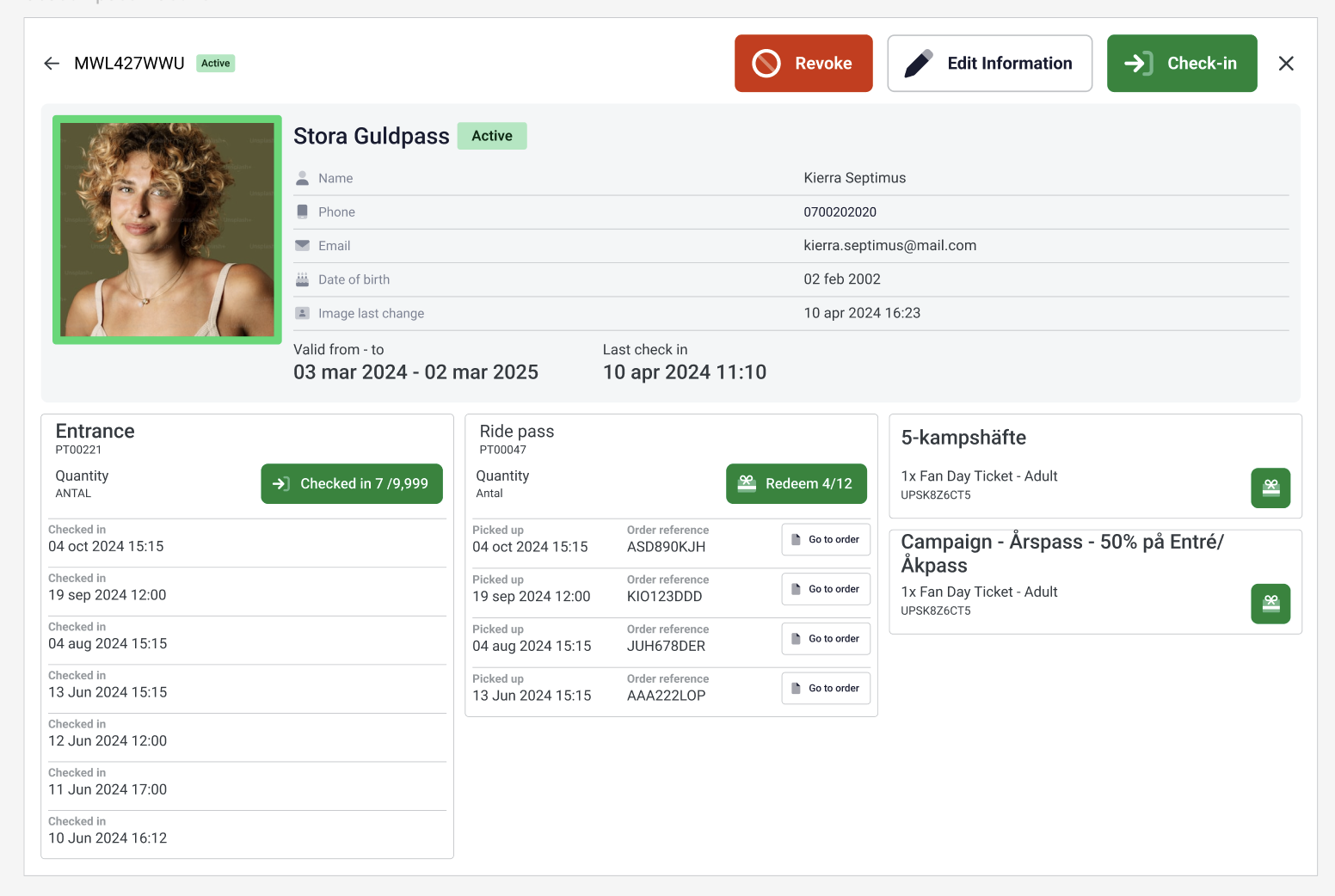
The screen when your scanning a season pass.
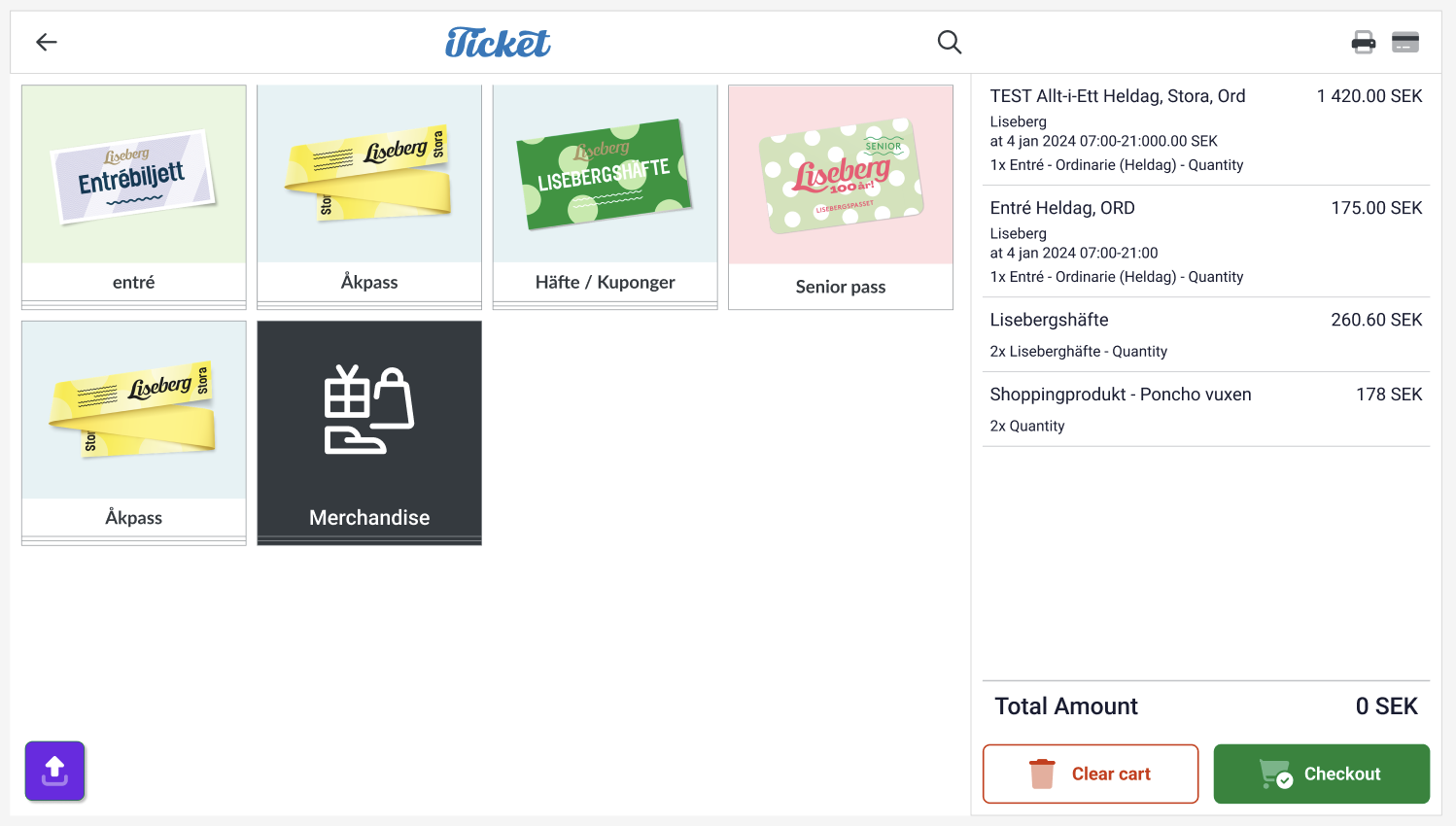
In the purchase step, one of the most common screens. When a customer has said what they want to buy, the cashier adds it to the cart, and this is the screen before the payment step.
Your specific role in the project and how you collaborated with others
As the UX designer, I focused on making the product intuitive and accessible for all users. I facilitated collaboration between backend and frontend developers, provided design input, and supported troubleshooting and feature development. By maintaining clear communication, I ensured our solutions were both user-centered and technically feasible, resulting in a cohesive product.
This collaborative approach clarified system limitations and uncovered opportunities for innovation, directly shaping our design direction.
How you came to your proposed solution
To address project needs, I conducted user interviews, analyzed current POS workflows, and performed usability testing to identify pain points firsthand.
Using these insights, I developed streamlined user flows and actively incorporated feedback from product management. Once finalized, I partnered with frontend developers to rigorously test each update.
This process eliminated bugs and unnecessary steps, allowing us to focus on delivering core features efficiently.
Challenges you faced, including design concepts that were ultimately not pursued
However, the initial brief was unclear, and tight deadlines constrained feedback and research, requiring us to make informed assumptions.
How the project affected the users and the business
However, the initial brief was unclear, and tight deadlines constrained feedback and research, requiring us to make informed assumptions.
What I learned
This project reinforced the value of iterative testing and consistent communication with developers, ensuring successful client delivery and broad customer appeal.
Observing real users with the scanner directly influenced our development choices and confirmed that early research helps prevent future issues.