


Design files
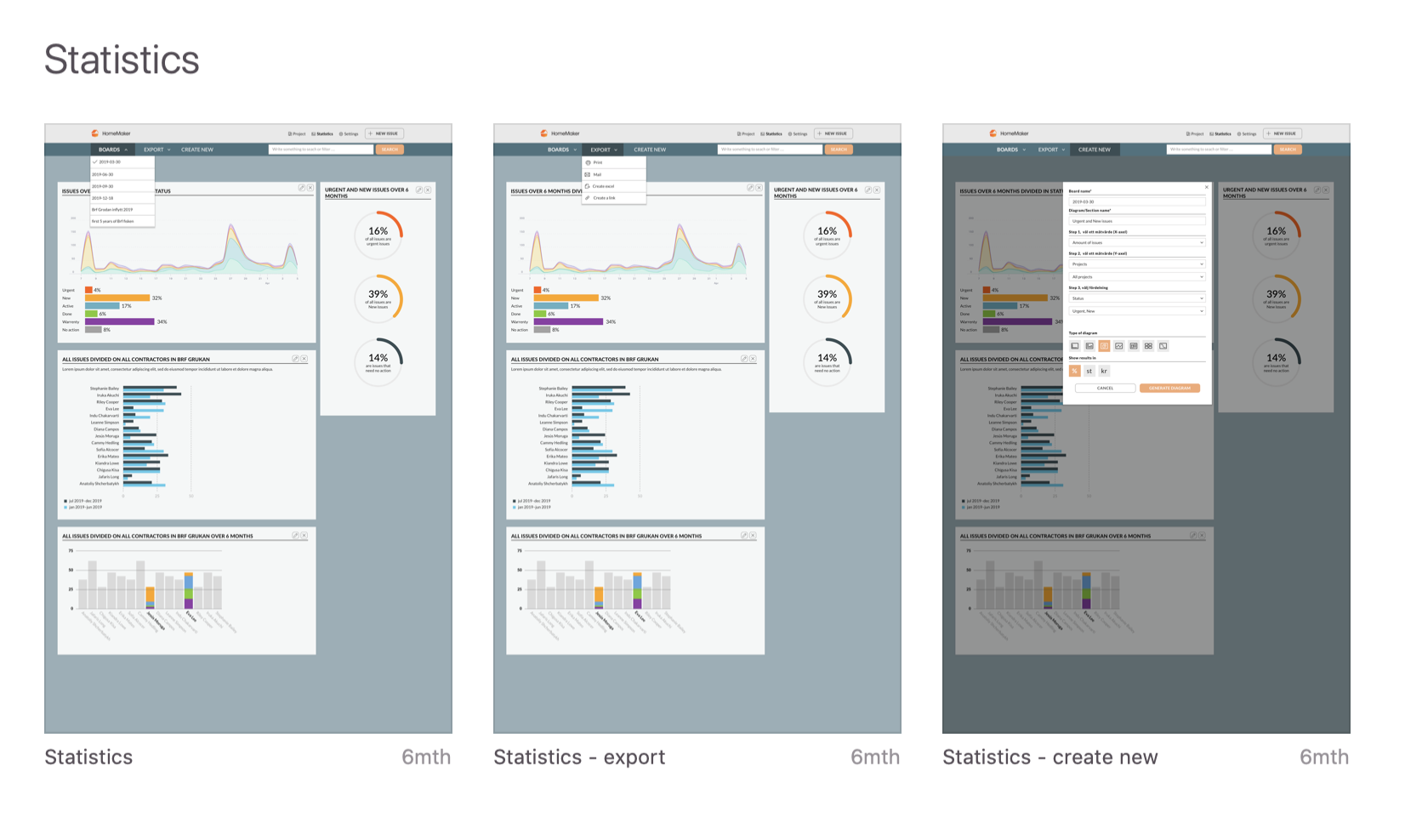
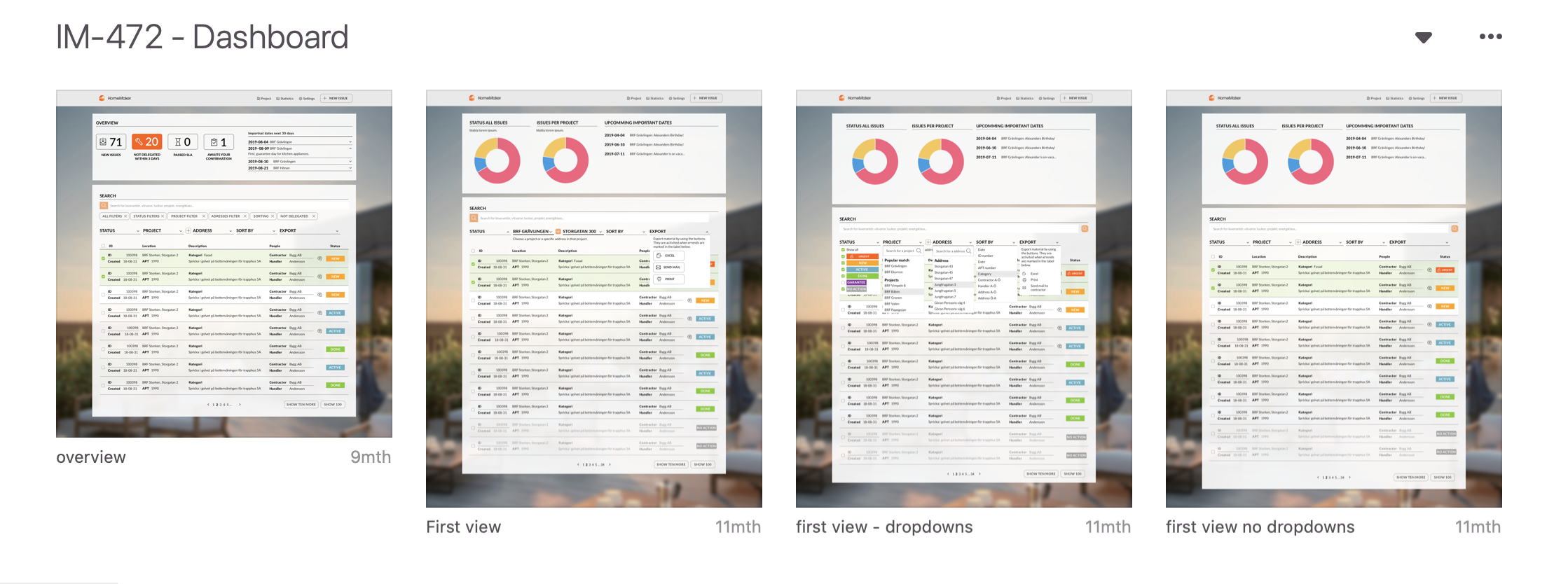
HomeMaker - Service
A cloud-based system for handling issues related to warranty and other building-related matters.
The problem(s) you had to solve or the hypothesis you came up with for solving them
The application suffered from an outdated, developer-led design that lacked clear information and user guidance. Users were often unsure about system actions and responses, largely because the product had not been tested by its intended audience. Usability issues persisted due to the absence of user-centric design practices in the original development process.
Based on meetings and interviews with clients, but also input from the team. My design was built on this to reflect new needs and wants from both business and users.
Your specific role in the project and how you collaborated with others
As the company’s first product designer, I joined an agile team with three developers and a product owner, bringing design expertise and a user-centered perspective to the organization.
I took ownership of the overall design direction. Driving user interviews, collaborating closely with the team, and ensuring quality control alongside our in-house tester.
How you came to your proposed solution(s)
I took a research-driven approach, collecting insights from client interviews, team meetings, Customer Success feedback, and analytics tools such as Hotjar. By synthesizing this data in Productboard, I was able to prioritize features and improvements based on real user needs and business goals, ensuring our decisions were grounded in actionable insights.
How did your proposed solution(s) solve the problem
I proactively proposed sprint priorities to the product owner, validated recommendations with user cases, and translated these into actionable designs for development, testing, and release.
Challenges you faced, including design concepts that were ultimately not pursued
One of the biggest challenges was introducing design thinking and user feedback processes to a team unfamiliar with these methods. I had to patiently guide the organization through adopting new tools and workflows, implementing changes incrementally to build buy-in and understanding.
But it still broke my spirit when I realised the development team wasn't as agile as I'd imagined. Feedback on changes after they had been deployed was out of the question.
How the project affected the users and the business
The redesigned application exceeded adoption expectations: all users migrated to the new version in just 3 months, instead of the 6 months anticipated, demonstrating the effectiveness and user-friendliness of the new design.
What I learned
This experience taught me the importance and challenge of communicating user feedback to teams unaccustomed to iterative, feedback-driven processes. Establishing a feedback loop required persistence, clear rationale, and ongoing advocacy for the user perspective.
Ultimately, I learned that my growth as a designer depends on working in environments where design insights are valued and where the organization embraces a culture of continuous improvement and self-reflection.