Project - HomeMaker, Showroom
About
HomeMaker is a digital store for designing your new apartment, allowing users to select appliances and fixtures ahead of their move. The project began as a company initiative to overhaul the product and elevate the user experience.
Challenges
Establishing new ways of working. Combined with developing designs for a growing product and user base.
Delivering designs on my own and challenging assumptions.
My role
As the product designer, I spearheaded collaboration with user support and identified and prioritised user needs.
I worked cross-functionally to refine and validate the design for users, clients, and business stakeholders. My approach centered on integrating diverse perspectives, ensuring that every design decision contributed to a cohesive and user-centric product..

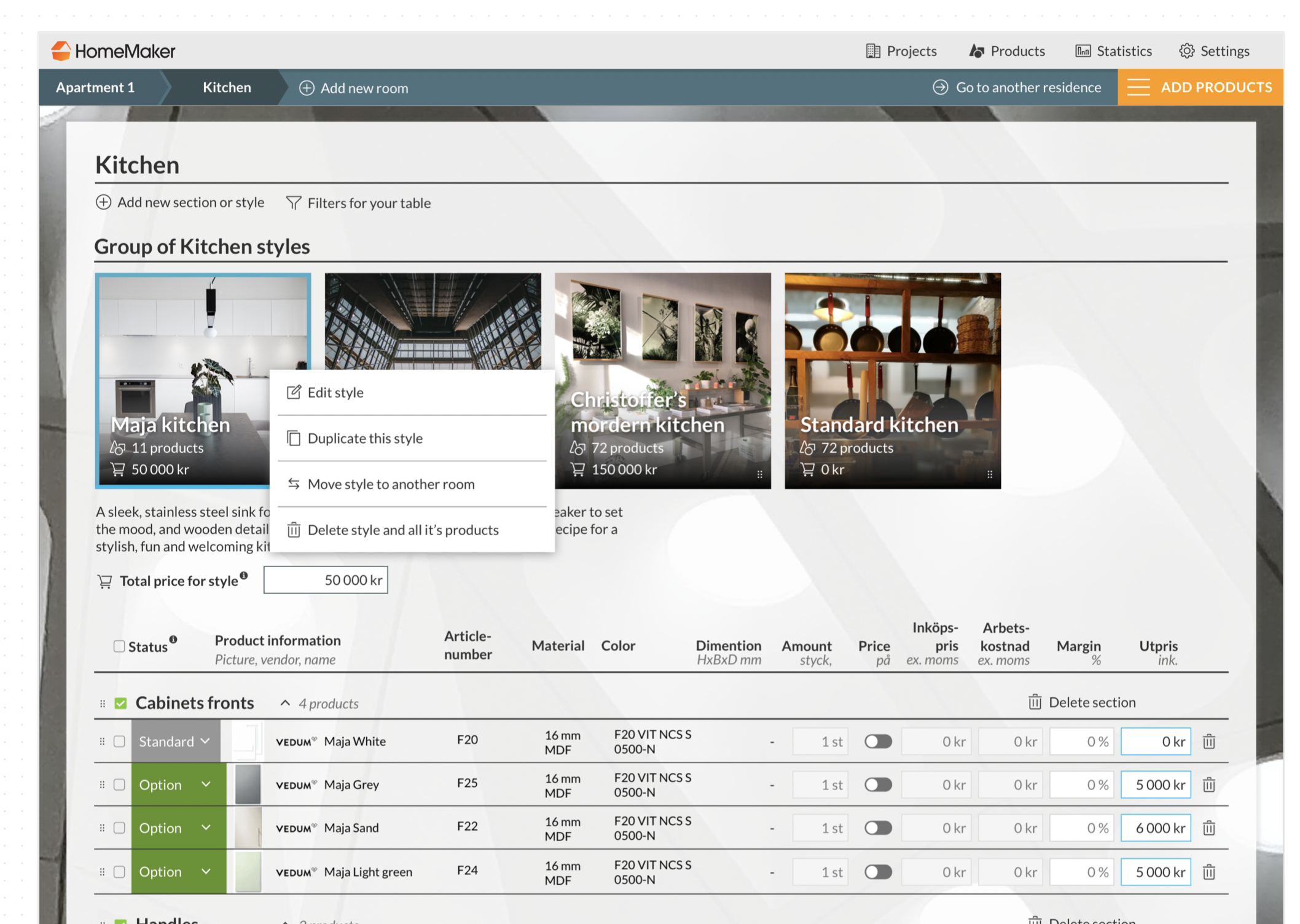
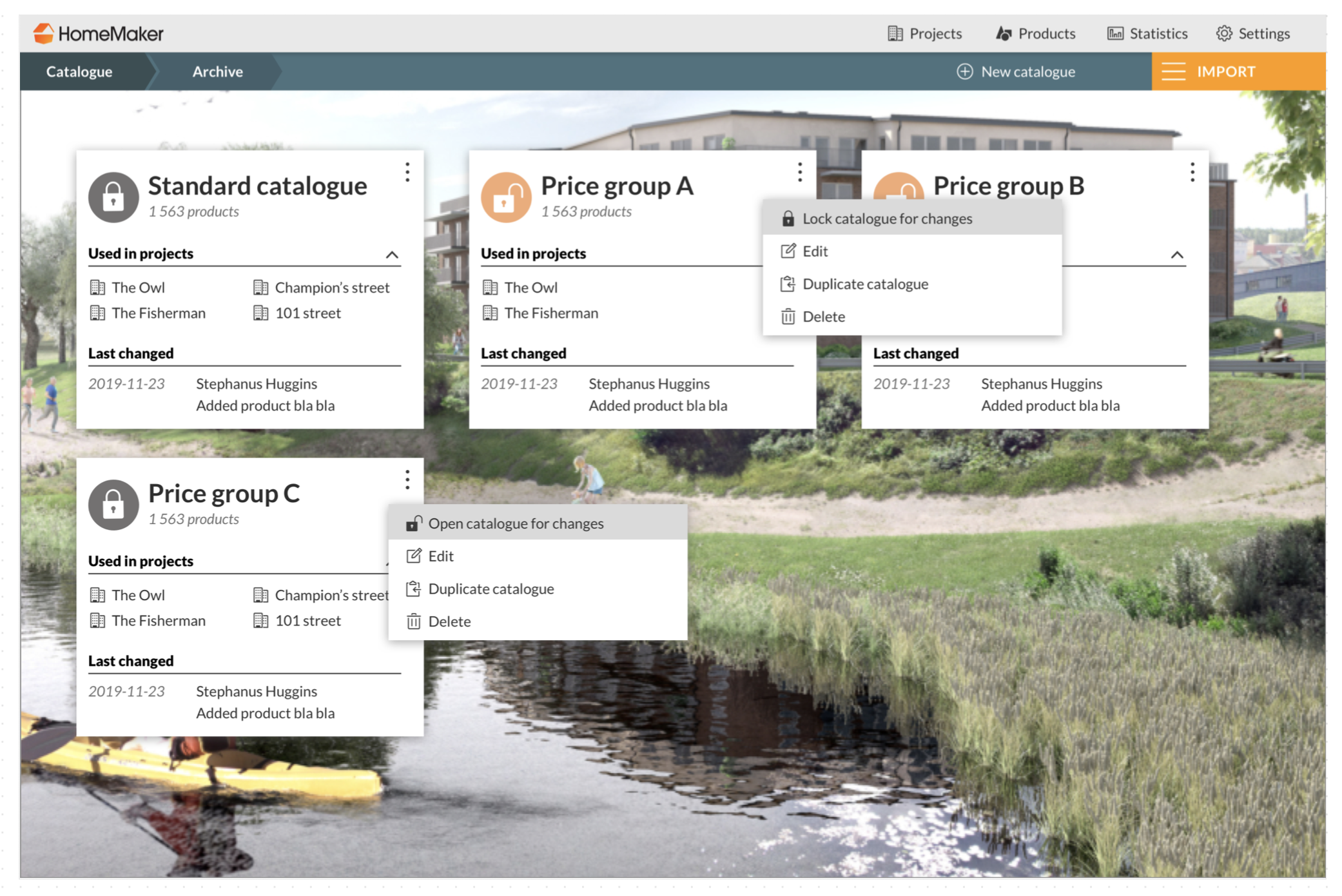
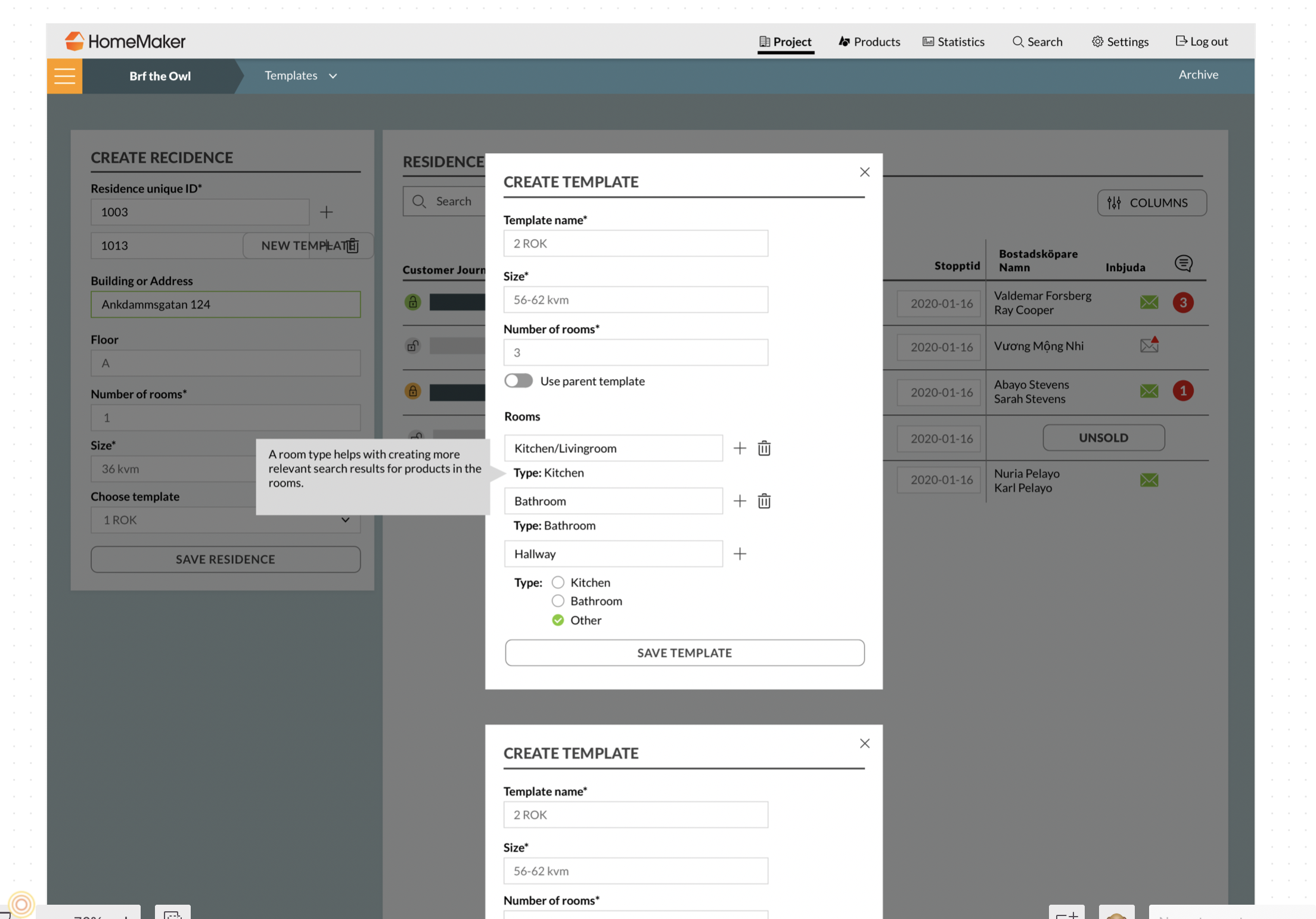
overview of showroom selector.
Your specific role in the project and how you collaborated with others
During development, the product expanded beyond new-build apartments to cover renovations, a CRM/Leads-generating platform, and issue handling. These features were added incrementally throughout the project's timeline, with new updates based on user feedback at each stage.
How you came to your proposed solution
While conducting interviews and combining them with data, it became clear that admins struggled to identify specific items. I focused on deeply understanding their workflows and pain points, then translated these insights into actionable design improvements to streamline their experience.
Through regular meetings with clients and gathering feedback from customer success, sales, and the product owner, I led the creation of a new design focused on resolving these usability issues and delivering clear, intuitive experiences for both businesses and users.
Challenges you faced, including design concepts that were ultimately not pursued
A major challenge was introducing design thinking and user feedback processes to a company unfamiliar with these practices. I adapted my approach, introducing new tools and methods incrementally to build understanding and adoption within the team.
The design that was not pre-cued included removing clutter, but the layout felt like it had a strong connection to the brand identity of HomeMaker and nothing I really had the ability to change at that moment in time.
How the project affected the users and the business
Since the product was in early development, it’s too soon to measure the full impact. However, my primary objective was to lay the groundwork for a more intuitive and accessible application as it evolves through ongoing development.
What I learned
I learned firsthand how challenging it can be to communicate user feedback to a team unfamiliar with feedback loops, especially when rapid development cycles limit reflection. Establishing a culture of iterative feedback requires persistence and clear communication about the rationale behind design decisions.
Also that design is not only what the user needs its ’s also what the business wants. And as a designer, it is my role to combine the different interests into one concept.